Tag Archives: China

image_pdfimage_print

HKETO, Brussels supports sixth Barcelona International Dragon Boat Festival (with photos)

     The Hong Kong Economic and Trade Office in Brussels (HKETO, Brussels) supported the sixth Barcelona International Dragon Boat Fest, held from May 23 to 25 (Barcelona Time) in Castelldefels, Barcelona in Spain.

     Presenting awards on May 25, Assistant Representative of HKETO, Brussels Mr Paul Leung remarked that dragon boat racing is a celebration of sportsmanship, culture and community spirit. “In addition to being an international trade, financial and logistics centre, Hong Kong is a dynamic city where sports form a key part of its citizen’s lives. With the newly opened Kai Tak Sports Park, Hong Kong will be hosting more international sports and cultural events, showcasing the city’s remarkable vibrancy,” he added.

     He also invited attendees to visit Hong Kong to dive into its colourful arts scene, savour world-class cuisine, explore breathtaking nature, relax on golden beaches, and experience the city’s unforgettable energy.

     More than 700 participants and 30 dragon boat teams from 16 countries or regions took part in the Festival’s competitions. In addition, visitors experienced the fun of the sport by rowing a dragon boat sponsored by HKETO, Brussels and visited the Hong Kong booth to learn more about the city.

Photo  Photo  Photo  
read more

Remarks at question and answer session of Working Group on Promoting Silver Economy press conference (with photos)

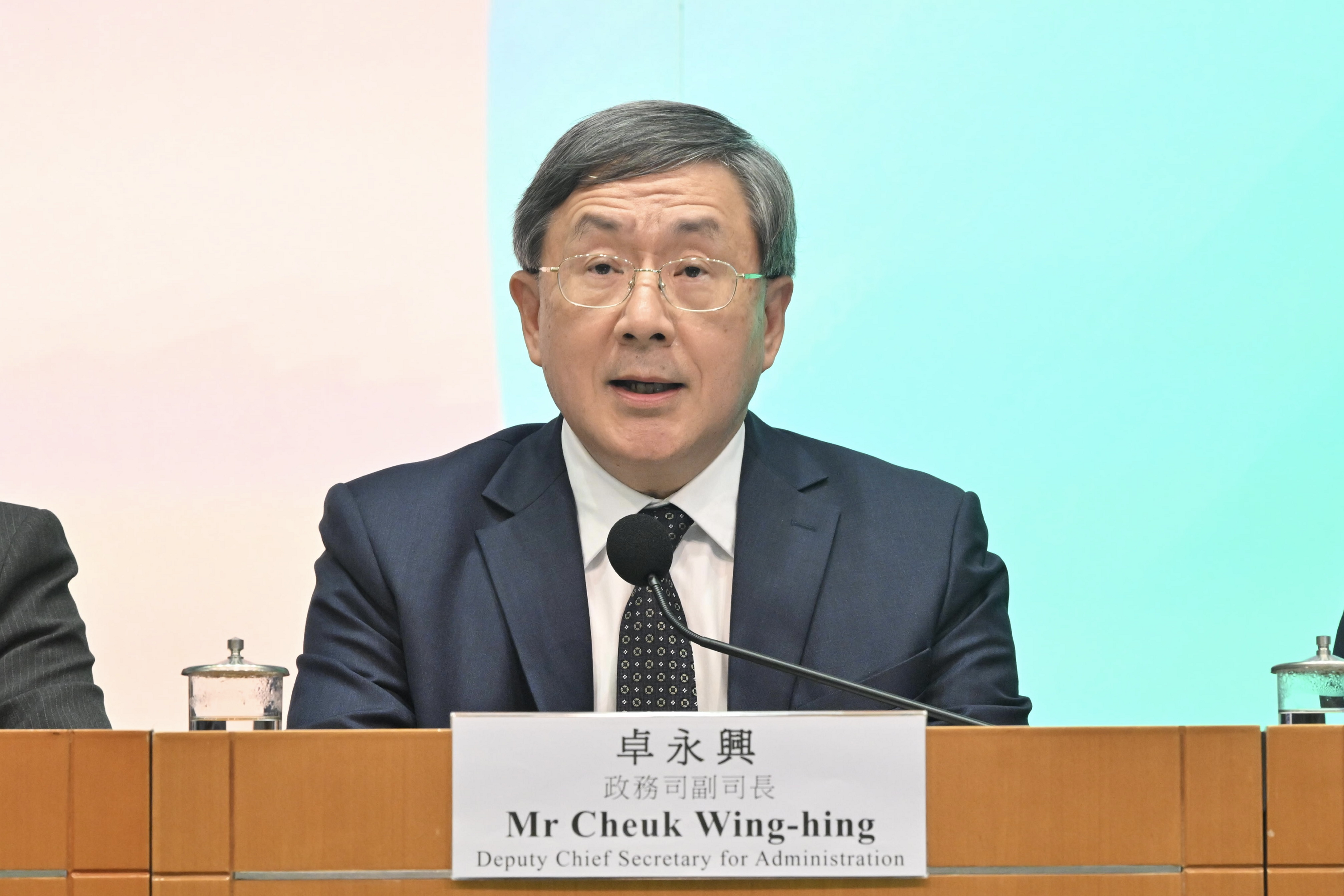
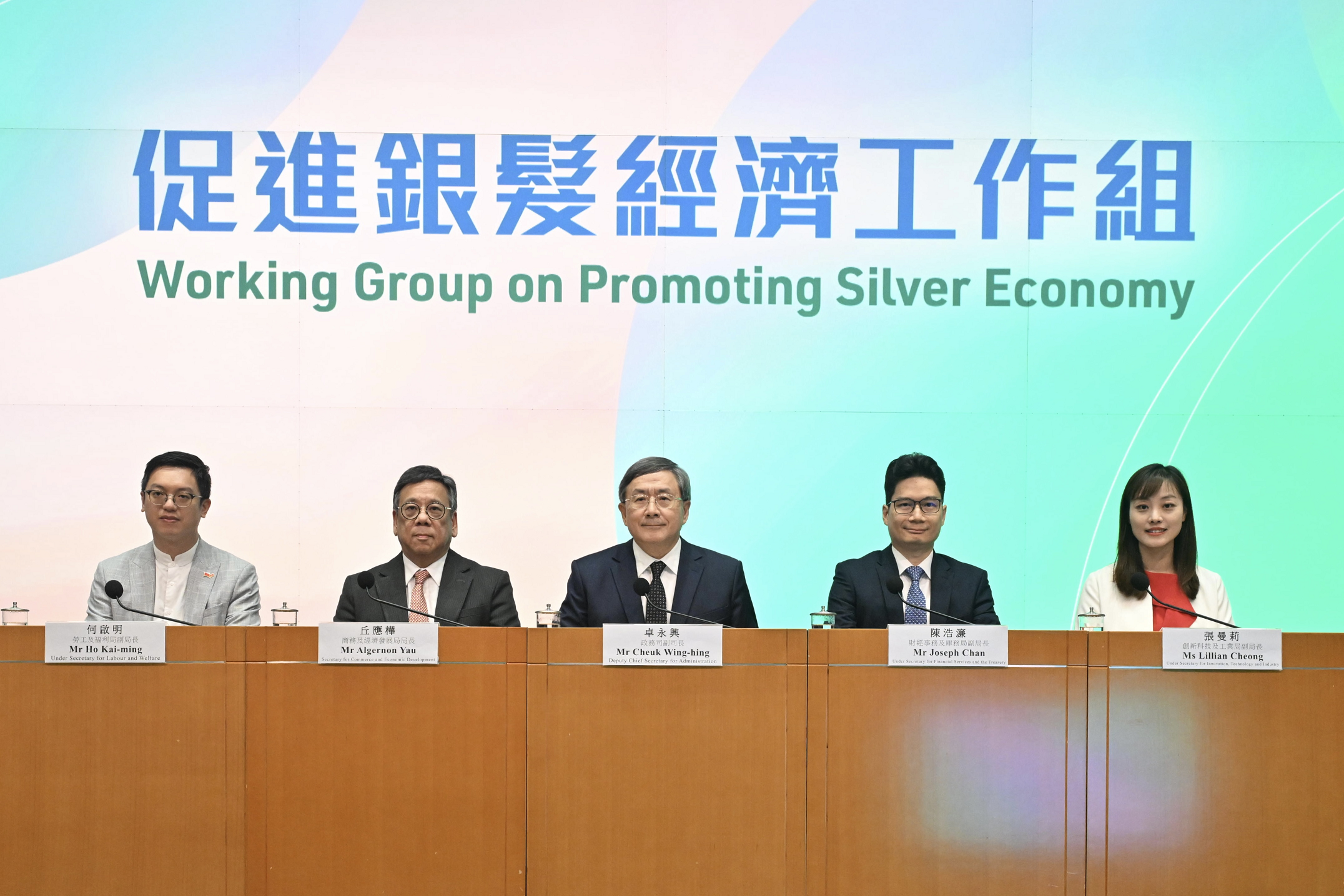
     The Deputy Chief Secretary for Administration, Mr Cheuk Wing-hing, held a press conference today (May 27) on measures to be implemented by the Working Group on Promoting Silver Economy together with the Secretary for Commerce and Economic Development, Mr Algernon Yau; the Under Secretary for Financial Services and the Treasury, Mr Joseph Chan; the Under Secretary for Labour and Welfare, Mr Ho Kai-ming; and the Under Secretary for Innovation, Technology and Industry, Ms Lillian Cheong. Following are Mr Cheuk’s remarks at the question and answer session:

Reporter: Some English questions. First, because you mentioned that the Government will encourage post-50s to rejoin the labour market, do you have a target of how many more people above 50 will be rejoining the workforce, and what kinds of jobs or industries should attract the most of these people? And the second question, given the current economic situation of Hong Kong, how do you expect these measures to contribute to the economy and the GDP? And when will you review your measures? Thank you.

Deputy Chief Secretary for Administration: I take your questions briefly, and then I see if other colleagues may have anything to supplement. On the possible addition to the labour force, in 2024, the labour participation rate of Hong Kong people above the age of 60 is about 23.7 per cent, while the overall – if you take the whole Hong Kong workforce into account – the labour participation rate is 54.7 per cent. If you look at the figure in 2025 this year, the first quarter, the figure I gave you just now was relating to people above the age of 60, which could go up to as high as 70-something, 80-something. But if you zoom in on the age bracket of 60 to 69, the labour participation rate in the first quarter of 2025 is 38.8 per cent. If you look at the overall labour participation rate and the labour participation rate of this age bracket, it will give you a differential of about 16 per cent. Theoretically, that is the number that we can go for. 

     Your second question is about how our measures would contribute to GDP growth. I mentioned this in the reply to an earlier question. I think instead of setting a KPI, which actually is not appropriate for this kind of programme, which involves implementation by many outside parties, and the result of which is rather beyond the control of the administration, I think it is more realistic or instructional to look at what we are talking about in terms of what the magnitude of the silver economy is. Worldwide, the practice to measure silver economy is to look at the consumption of the elderly. In 2024, the elderly spending of people aged 60 and above amounted to $342 billion, and in 10 years’ time, it is predicted to grow to $496 billion, that is the kind of magnitude of silver spending. If we can achieve a 5 per cent growth a year, say if we just take the first year as an illustration, that would amount to $17 billion, which is quite substantial.

(Please also refer to the Chinese portion of the remarks.)

Photo  Photo  
read more

Secretary for Health meets with Mainland delegations and WHO representative to deepen Hong Kong’s unique role in connecting Mainland and world (with photos)

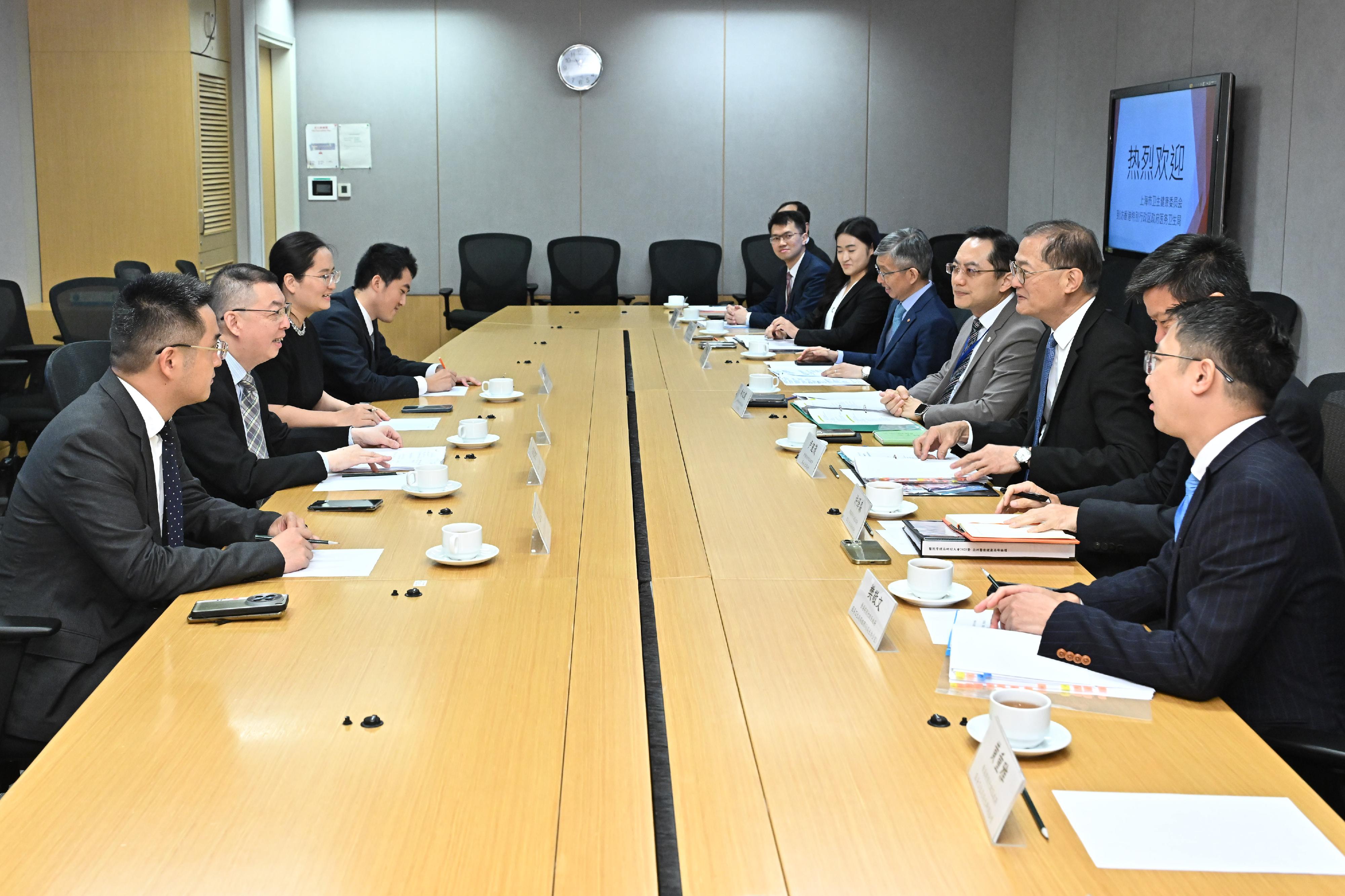
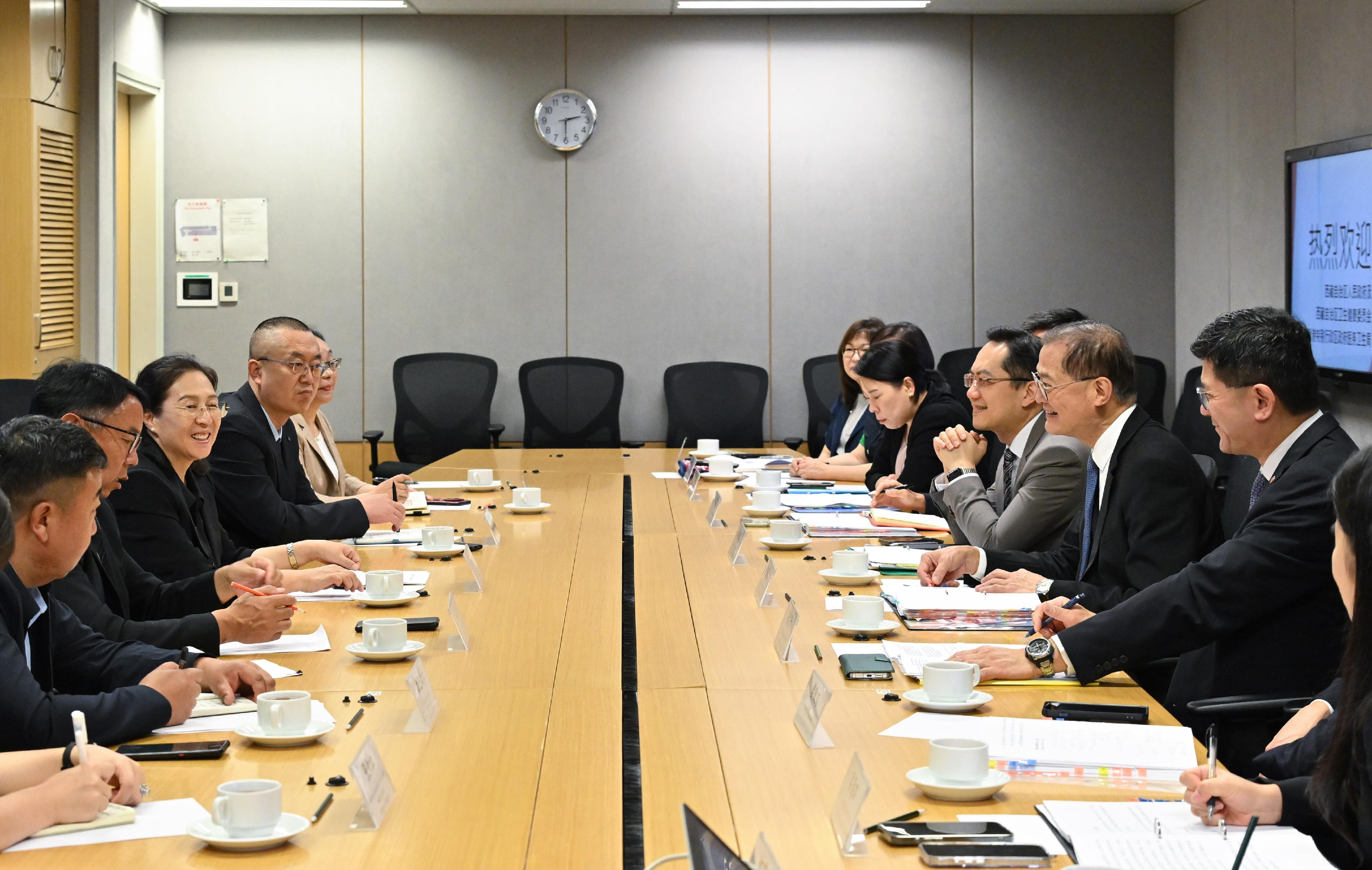
     The Secretary for Health, Professor Lo Chung-mau, continued to meet with the Mainland delegations coming to Hong Kong to attend the Hospital Authority (HA) Convention 2025 and the World Health Organization (WHO) Representative to China, Mr Martin Taylor, today (May 27) to exchange views on various healthcare issues and explore the strengthening of related healthcare co-operation, with a view to further deepening Hong Kong’s unique role in connecting the Mainland and the world.

     In the morning, Professor Lo met with the delegation led by Deputy Director General of the Shanghai Municipal Health Commission Professor Hu Hongyi to exchange views on topics including the healthcare talent exchanges between Hong Kong and Shanghai and the internationalisation of Chinese medicine standards. Professor Lo said, “The Hong Kong Special Administrative Region (HKSAR) Government attaches great importance to medical collaboration with the Mainland on various fronts and has been strengthening co-operation on healthcare service development with various Mainland counterparts to jointly enhance healthcare quality under the principle of complementarity and mutual benefits, and on the premise of benefitting the healthcare development of both the Mainland and Hong Kong. The HKSAR Government will remain committed to fostering cross-boundary medical co-operation to propel the important national strategy of ‘Healthy China’ through concerted efforts.”

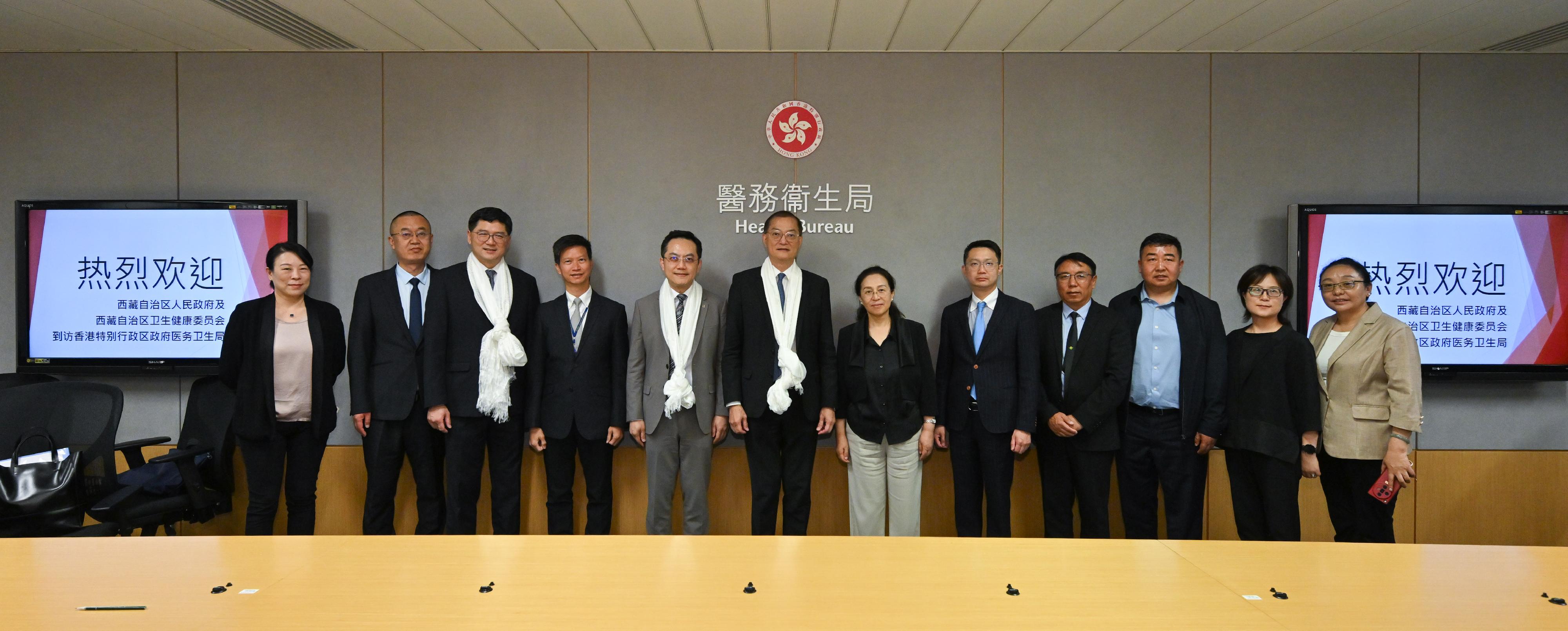
     At the meeting with the delegation led by Vice Chairman of the People’s Government of the Xizang Autonomous Region Ms Luo Mei in the afternoon, Professor Lo introduced the structure of the healthcare system in Hong Kong and shared relevant management experience. Both sides also exchanged views on the development of traditional medicine.

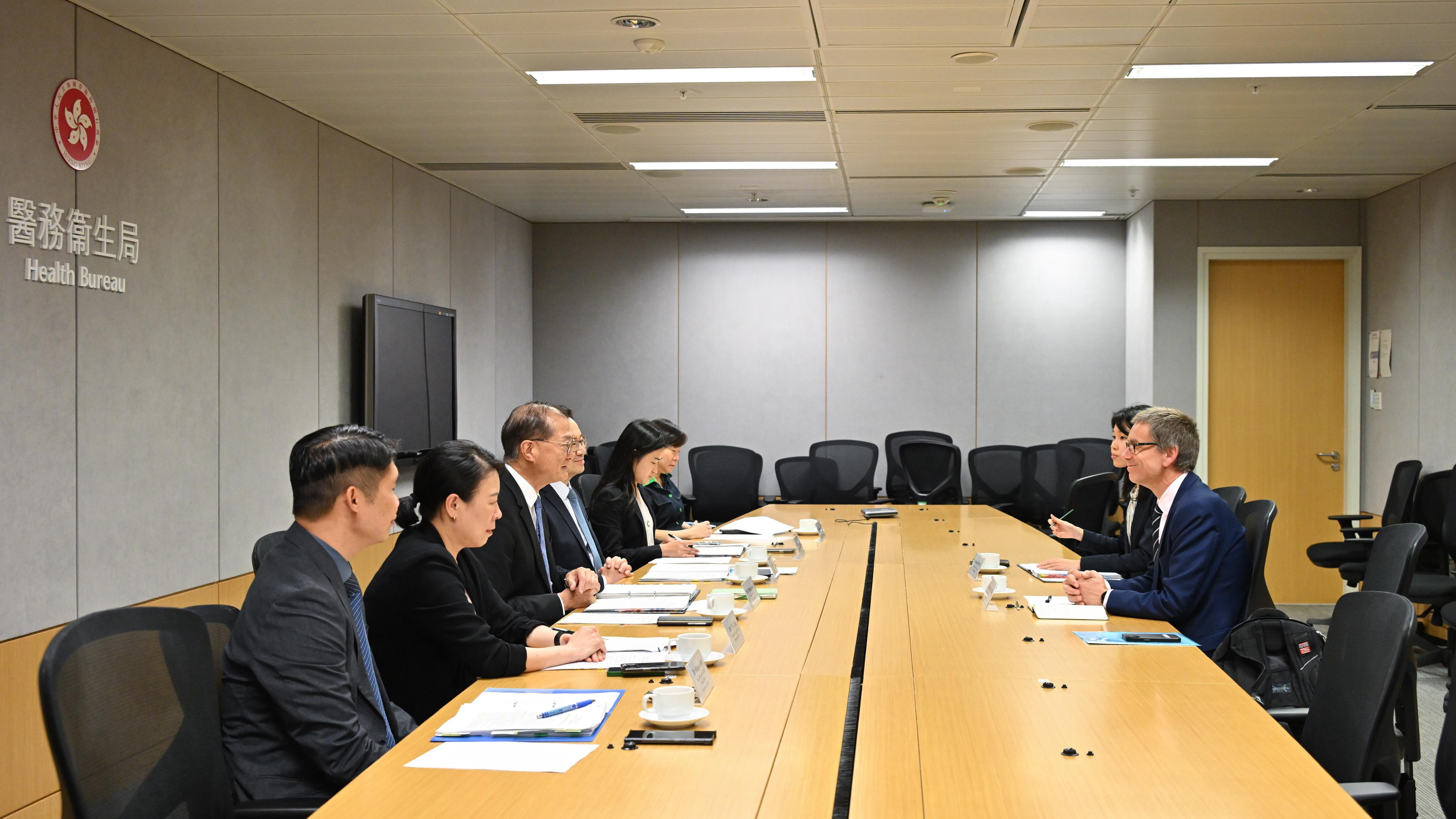
     Professor Lo then met with the WHO Representative to China, Mr Martin Taylor, to introduce him to the comprehensive tobacco control strategies in Hong Kong. Professor Lo emphasised, “To further alleviate the threat posed by tobacco to public health, the HKSAR Government’s new phase of tobacco control measures is formulated around four directions, namely, Regulate Supply; Ban Promotion; Expand No Smoking Areas; and Enhance Education. We hope to suppress the use of tobacco and minimise its harm to the community through adopting a multipronged tobacco control strategy.” During the meeting, both parties agreed that sustained international co-operation is particularly important to further strengthening global tobacco control efforts and safeguarding public health.

     The HA Convention and the Asia Summit on Global Health are both important annual events of the healthcare sector. Medical experts, academics and practitioners from the Mainland and overseas, as well as government officials in charge of healthcare policies from around the world, gather in Hong Kong to have extensive exchanges and share their knowledge and experience in their respective fields, while also exploring opportunities for international healthcare co-operation, thereby deepening Hong Kong’s important role as a “super-connector”.

Photo  Photo  Photo  Photo  
read more

HKSAR Government responds to Hong Kong credit ratings affirmations by S&P and Moody’s

     In response to reports by two rating agencies, namely S&P and Moody’s which affirmed Hong Kong’s credit ratings today (May 27), a Government spokesman made the following response:

     The Government noted that S&P has maintained Hong Kong’s “AA+” credit rating with a “stable” outlook, while Moody’s has affirmed Hong Kong’s “Aa3” credit rating, and upgraded the outlook from “negative” to “stable”.

     Both S&P and Moody’s provided positive evaluations of Hong Kong’s credit profile, including its substantial fiscal buffers and foreign exchange reserves, a strong external balance sheet, and high per-capita income levels. Moody’s highlighted that, despite global trade tensions and lower trade growth, Hong Kong’s effective policy framework, along with the resilience of its economy and financial system, will continue to support its creditworthiness. S&P noted that the Hong Kong Special Administrative Region (HKSAR) Government’s policy flexibility and effectiveness have improved, while Hong Kong’s Linked Exchange Rate System has provided an anchor for the financial system, even through episodes of volatility.

     The recent affirmations of Hong Kong’s credit ratings by Fitch, S&P and Moody’s, all with “stable” outlooks, demonstrate Hong Kong’s resilience in maintaining stability amid increasing global economic and financial uncertainties.

     Recent data has further underscored the robustness of Hong Kong’s financial system. Bank deposits have continued to grow, capital markets remain active, and the IPO (initial public offering) market is thriving. For example, IPO fundraising in Hong Kong has exceeded HK$76 billion so far this year, more than seven times the amount raised during the same period last year and nearly 90 per cent of the total raised in all of last year.

     Both S&P and Moody’s have highlighted the HKSAR Government’s substantial fiscal reserves. Despite pressures on public finances following the pandemic, the Government has implemented a series of measures to maintain a robust fiscal situation. The 2025-26 Budget outlined a reinforced fiscal consolidation programme, focusing primarily on expenditure control, supplemented by revenue generation, to gradually restore balance to government accounts.

     According to the HKSAR Government’s medium-range forecast, the Operating Account  (i.e. the Government’s daily income and expenses)  is expected to be largely balanced in this financial year, and will return to a surplus in the next financial year (2026-27).

     As for the Capital Account, which primarily involves capital works expenditures, which represents investments for the future,  such as the development of the Northern Metropolis, the Government will make flexible use of market resources, such as public-private partnerships and increasing the scale of bond issuances, to fast-track the related projects. Even so, the level of deficit in the Capital Account will gradually decrease starting from the 2026-27 financial year.

     Overall, after counting the proceeds from bond issuances, the Consolidated Accounts will return to a surplus in the 2028-29 financial year. Over the next five years, fiscal reserves are projected to remain at a level well above HK$500 billion.

     On the economic front, Hong Kong’s economy saw robust growth in the first quarter of this year. While the tariff war continues to affect the global economy, the recent easing in international trade tensions has slightly alleviated external unfavourable factors and uncertainties. Meanwhile, the Mainland continues to advance high-level opening up, with steady economic growth supported by ample policy room and tools to address and resolve various risks and challenges. With breakthroughs and expedited developments in technology innovation, green transformation and the digital economy, the Mainland offers the greatest backing for Hong Kong’s economic development.

     Looking ahead, the Government is confident in addressing external challenges while seizing new opportunities in this evolving landscape. The HKSAR Government remains committed to leveraging Hong Kong’s institutional advantages under the “one country, two systems” framework, reinforcing and enhancing its status as an international financial, shipping and trade centre. At the same time, the Government will make great strides to promote Hong Kong’s development as an international innovation and technology centre. These factors will drive high-quality, sustainable economic and social development. read more